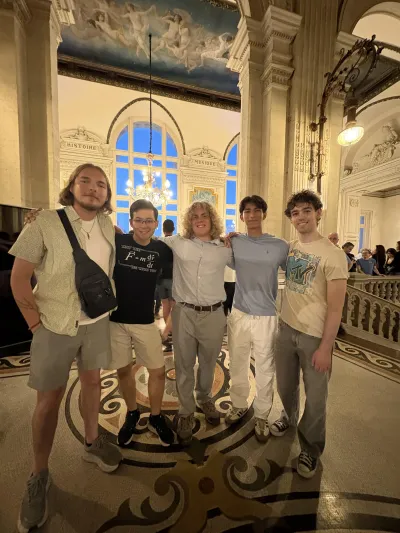
This summer I took a study abroad experience in Montpellier, France, attempting to get my French to reach a higher proficient level. While I did learn a lot of vocabulary, grammar, and speaking French without having to overthink it, the goal I sought was to learn as much French culture, politics, and people as possible. To this goal, I feel as though I exceeded my expectations of what was possible.
I set this study abroad goal because I knew there was a fundamental difference in how French and Francophone society sees and acts in the world compared to Americans. The words I say in French which cross over directly from English carry different meanings. Two examples stand clearly above all else: When clinking wine glasses with people, you make eye contact in France. Secondly, when I was settling into a hostel for the night in Corsica, the hostel employee told me in broken English “Good installation!”
Understanding the small gestures and small discrepancies that arise across language translation is crucial to my aspiration of immigration and human trafficking law. The French communities in both of these fields lack adequate legal representation and aid. Google Translate is fundamentally incapable of perceiving cultural nuance the way human eyes are able to. In my view, the usage of Google Translate in critical situations (Such as trafficking survivors) is unacceptable, and a competent person must be present to look at a person and perceive their language and person; combined, not split. That is what I went to France for, and I brought back the lessons I wanted, plus many, many more.
Henry Thomas, current Ohio State student