The French Center of Excellence has an exciting fall semester planned with amazing speakers traveling to Ohio State from around the globe. Mark your calendars for these wonderful opportunities!
Learning to Live Inside a Novel with Laure Gouraige
Thursday, September 3rd | 4:00-5:30pm
Thompson Library Multipurpose Room 165
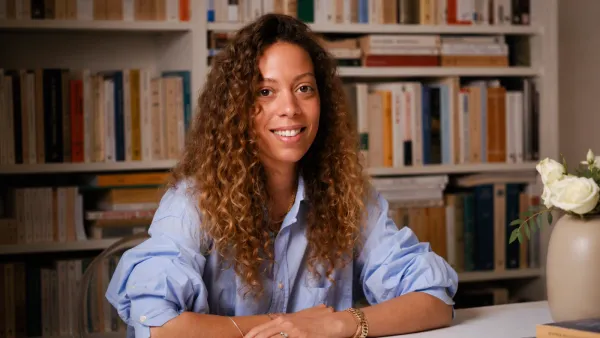
This talk explores the evolution of my writing process, from my first autobiographical texts to my current work of fiction, Mirapolis. Rather than focusing on my published books themselves, I would like to reflect on what each of them has taught me about becoming a novelist. I will discuss the relationship between lived experience and fiction, the challenge of transforming personal experience into literature, the role of philosophical questioning in my work, and the gradual shift from writing about myself to inventing entirely fictional worlds. Finally, I will reflect on how working on a long-term project has transformed my understanding of writing, not as a succession of moments of inspiration or urgency, but as a way of inhabiting time.
Laure Gouraige is a French novelist based in Paris. She is the author of four novels: La Fille du père (P.O.L, 2020), Les Idées noires (P.O.L, 2022), Le livre que je n’ai pas écrit (P.O.L, 2024), and Grave (Les Intranquilles, 2026). Her work explores questions of identity, memory, family, and the ways fiction transforms lived experience. She is currently completing Mirapolis, a novel inspired by her writing residency in the United States. In 2026, she was awarded the Jules Verne Writing Residency, which has brought her to several universities across the American Midwest.
The First Crowned Monarch of the New World: the Rise and Fall of Haiti’s Henry Cristophe with Marlene Daute
Thursday, October 8th | 4:00-5:30pm
Thompson Library Multipurpose Room 165
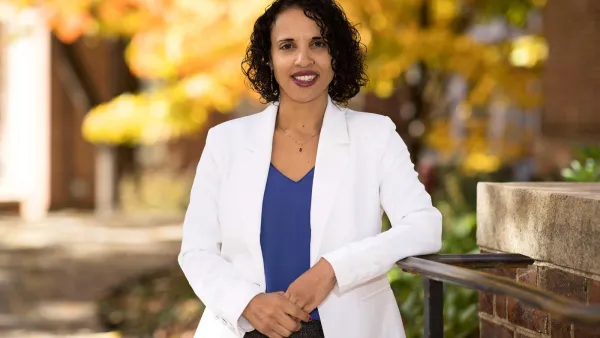
Slave. Revolutionary. King. Taken together, these words describe only one man: Henry Christophe I of Haiti. Born in 1767 to an enslaved mother on the island of Grenada, he first fought to overthrow the British in North America, before helping enslaved Africans in Saint-Domingue, as Haiti was then called, to gain freedom from slavery. After the Revolution, he offered to lead independent Haiti and became the country’s first and only king. But it all came to a sudden and tragic end when after only thirteen years of ruling, Haiti’s King Henry I shot himself in the heart, some say with a silver bullet.
Marlene L. Daut is the Chester D. Tripp Professor of Black Studies and French at Yale University and the author most recently of The First and Last King of Haiti: The Rise and Fall of Henry Christophe (Knopf, 2025), winner of the James Tait Black Prize in Biography and a finalist for the Cundill History Prize. She was recently awarded a Guggenheim Fellowship and will spend the academic year 2026-2027 as the John and Constance Birkelund Fellow at the Cullman Center for Scholars and Writers (NYPL).
Exhaustion: National Trauma and Feminist Anti-Portraiture
Thursday, October 22nd | 4:00-5:30pm
Thompson Library 11th Floor Reading Room
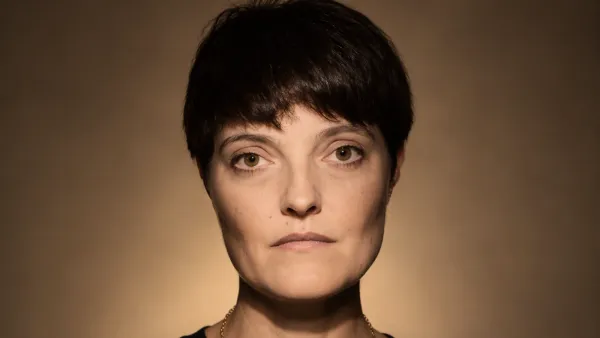
Erin Shevaugn Schlumpf’s book, Remnants of Refusal: Feminist Affect, National Trauma (SUNY UP 2025), pushes the burgeoning field of Sino-French studies. In the book, she analyzes cases of what she terms "feminist refusal" in literary and cinematic texts that were produced after the 1940-1944 German Occupation of France and, forty-five years later, after the 1989 Tiananmen Square Massacre in China. This talk will introduce the ideas in Remnants of Refusal by offering a case study from the book’s third chapter which argues that writing by Nathalie Sarraute and Chen Ran employ affective exhaustion in response to the ideological “energetics” of capitalist expansion in France and China. The talk will explore how the practice of anti-portraiture in Sarraute’s Le Planétarium (1959) and Chen’s A Private Life (1996) offer forms of feminist refusal to historical erasure in post-traumatic periods.
Erin Shevaugn Schlumpf is Associate Professor of Film Studies at Ohio University. She is the author of Remnants of Refusal: Feminist Affect, National Trauma (SUNY Press, 2025). Her work has also appeared in differences: a journal of feminist cultural studies, French Studies, SubStance: A Review of Theory and Literary Criticism, among other venues.
Screening of Sierra de Teruel followed by Q&A with Jean-Louis Jeannelle
Wednesday, November 4th | 5:00PM
Wexner Center for the Arts
André Malraux was a novelist, critic, and a towering figure in 20th century French arts and culture, and was the country’s first Minister of Culture, appointed in 1959 by President Charles de Gaulle. Adapted from his novel, Malraux’s lone film Sierra de Teruel chronicles his experience fighting with Republican forces in the Spanish Civil War. The film was privately screened a few times in 1939, but was banned and shelved when France declared war on Germany. It was not screened for the public until 1945, and then in a heavily truncated version. A conversation between Jean-Louis Jeannelle, Professor of 20th Century French Literature at the University of Rouen, and Ohio State Associate Professor in the Department of French & Italian, follows the screening.
Cosponsored by the Wexner Center for the Arts, the French Center of Excellence and the French & Italian Department.
L’effet Malraux with Jean-Louis Jeannelle
Thursday, November 5th | 4:00-5:30pm
Thompson Library Multipurpose Room 165
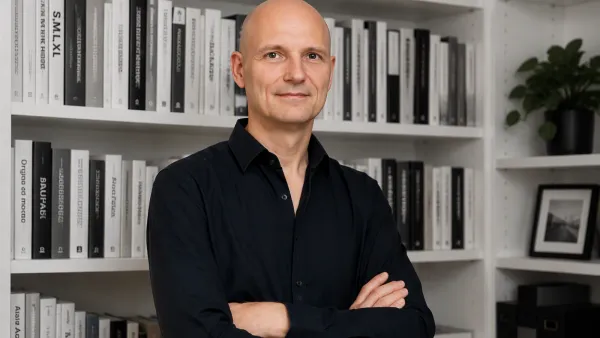
Au cours d'entretiens menés en compagnie de son époux, Jean-Toussaint (La liberté nous aime encore, Odile Jacob, 2001), Dominique Desanti déclara à Roger-Pol Droit au sujet d'André Malraux : « C’est certainement en lisant que je suis vraiment devenue communiste. Nous sommes d’ailleurs très nombreux, dans ma génération, à pouvoir en dire autant. La Condition humaine, Les Conquérants, L’Espoir laissaient une vive impression sur les gens de vingt ans à la recherche de quelque chose. » Nombreuses sont les traces de ce puissant effet d'initiation que la personne et l'œuvre de Malraux ont exercé sur plusieurs générations. Nous ne chercherons pas ici à trouver dans les actes, les discours ou les textes de l'écrivain les manifestations de son engagement ni ne nous interrogerons sur le sens d'un tel rapport à l'histoire et à la littérature, près d'un siècle plus tard. Il s'agira plutôt de retrouver la portée existentielle et idéologique de l'expérience malurcienne à travers les répercussions qu'elle eût sur les contemporains ou les successeurs de Malraux, car l'effet le plus puissant, et nullement latéral, d'un authentique engagement n'est-il pas d'engager autrui à s'engager. Mais à quoi ?
Jean-Louis Jeannelle est Professeur de littérature du XXe siècle à Sorbonne Université, membre du CELLF-UMR 8599 et directeur de l’École doctorale 019. Il est l’auteur de Vies mémorables. Variations littéraires sur le genre des Mémoires de la Libération à nos jours (Hermann, 2024), de Cinémalraux : essai sur l’œuvre d’André Malraux au cinéma (Hermann, 2015) et de Films sans images : une histoire des scénarios non réalisés de « La Condition humaine » (Seuil, coll. « Poétique », 2015). Il a précédemment publié Résistance du roman : genèse de « Non » d’André Malraux (CNRS Éditions, 2013), Écrire ses Mémoires au XXe siècle. Déclin et renouveau (Gallimard, coll. « Bibliothèque des idées », 2008) et Malraux, mémoire et métamorphose (Gallimard, 2006) et est le co-éditeur des Mémoires de Simone de Beauvoir en Pléiade (2018).