Autumn 2026 Course Offerings
Welcome to The Department of French & Italian
The most up-to-date list of course offerings is always available via View Schedule of Classes on BuckeyeLink.
FRIT Graduate Associates must work with faculty advisors and the Academic Program Coordinator if enrolling in 8303 (teaching apprenticeship), 8998 (Dissertation Research -pre-candidacy), 8999 (Dissertation Research - post-candidacy), and/or 8899 (Dissertation Workshop) hours.
French & Italian Language Courses: GEN World Languages
French Introductory Language - GEN: World Languages
French 1101.01, 1102.01, 1103.01 - Classroom
Beginning French I, II, and III (4 cr each)
French 1101.21, 1102.21, 1103.21 - Distance Learning
Beginning French I, II, and III (4cr each)
French 1155.01 - Classroom
Beginning French Review (4cr each)
Italian Introductory Language - GEN: World Languages
Italian 1101.03, 1102.03, 1103.03 - Blended
Beginning Italian I, II, and III (4cr each)
Italian 1101.71, 1102.71, 1103.71 - Online
Beginning Italian II and III (4cr each)
French Undergraduate Courses
French 2101.01 – Introduction to French & Francophone Studies
27267: Professor Ryan Joyce, TR 2:20pm-3:40pm, 3 credit hours, Mendenhall Lab 174, taught in French.
Welcome to the threshold course for the French minor and major! In French 2101, you will have the opportunity to practice and improve your writing, listening, and speaking skills in French, as well as continue to learn about French & Francophone literatures and cultures through reading, viewing and interpreting authentic literary and visual texts.
This lively course serves as a bridge between language courses (1101-1103) and upper-level courses in French. By emphasizing all four skills (listening, speaking, reading, and writing), it will improve your proficiency and prepare you for further coursework in language, literature, culture, and film and for a minor or major in French or French and Francophone Studies. In it you will interpret and analyse through oral discussion and in writing a variety of texts (short stories, films, songs, posters, etc.) from France and the Francophone world. Some grammar points will be reviewed, although grammar will be covered more intensely in FR 3101, which may be taken concurrently or after FR2101.
French 2101.61 - Introduction to French & Francophone Studies I.I.
Online Individualized Instruction (I.I.), 1-3 credit hours, taught in French
Techniques for reading and interpreting different types of texts from the French-speaking world: stories, poetry, plays, films, music, and ads while building vocabulary, comprehension, speaking and writing skills.
Prereq: 1103.01, 1103.21, or 4 cr hrs of 1103.51 or 1103.61, or permission of instructor. Not open to students with credit for 2101.01, 2101.01H, or 2101.51. Repeatable to a maximum of 3 cr hrs or 3 completions. This course is available for EM credit.
French 2801 - French Cinema - GEN Foundation: Literary, Visual & Performing Arts
Prof. Giuliano Migliori, TR 9:35am-10:55am, 3 credit hours, Campbell Hall 193, taught in English
Explore French cinema from its pioneering beginnings to the present day. Get to know the major eras in the history of French Cinema, such as the silent era, Poetic Realism, the Tradition of Quality, the New Wave, and modern French cinema, all within the context of French culture. Learn to discuss film as a text and talk about technical aspects like framing, mise-en-scène, and shot composition. The course is taught in English and all films are subtitled. No background in French or film studies is necessary.
French 2803.01 - Paris - GEN Theme: Lived Environments
Professor Kate Schlosser, TR 3:00pm-3:55pm, ONLINE, 3 credit hours, taught in English
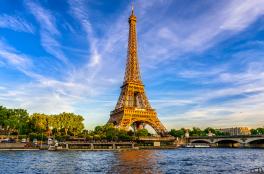
What was the city of Paris like in 1789, and how have its geography and society evolved over the last two centuries? By reading and viewing representations of Paris in a variety of media (maps, paintings, photographs, films, and literary and historical texts), we will explore both how the city’s landscape has shaped its society and how its increasingly diverse society has in turn shaped and transformed its landscape to suit Parisians’ evolving needs, desires, and caprices. Each two-week unit will treat representations of a specific event or era in Parisian history that had a significant impact on the city’s organization, architecture, and/or demography, and together the units will give us a general understanding of Parisian history over the last 230 years and of the multiple ways in which that history has been represented, and thus manipulated for various purposes.
French 3101 - French Grammar Review
35810: Dr. Kelly Campbell, WF 9:35am-10:55am, Hagerty Hall 251, 3 credit hours, taught in French.
Take your French to the next level! This intermediate course builds on grammar you already know while introducing new structures that help you communicate more clearly and naturally. Through regular practice, you’ll sharpen your listening, speaking, reading, and writing skills and gain confidence expressing yourself in French. Course conducted in French. Not open to native speakers of this language through regular course enrollment or EM credit.
Prereq: 1103.01, 1103.21, 4 cr hrs of 1103.51 or 1103.61, or permission of instructor. Prereq or concur: 2101.01, 2101.01H, or 3 cr hrs of 2101.51 or 2101.61. This course is available for EM credit.
French 3103 - French Conversation
Dr. Darrell Estes, WF 12:45pm-2:05pm, Hagerty Hall 251, 3 credit hours, taught in French
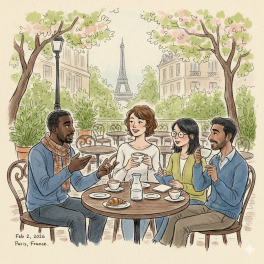
French 3103 is a course designed to improve students’ conversational French abilities on a wide variety of topics. Using various media (e.g., podcasts, music, video, print, and digital media), students will converse one-on-one and in groups on a variety of topics important in French and Francophone cultures (current events, heritage/history, the arts, broadcast and cinematic media, literature, etc.).
The purpose of this course is for students to develop their conversational abilities through active listening and reading using the above-mentioned media, as well as speaking. Through a combination of listening, reading, and speaking, conversational ability will be honed, and fluency developed. Likewise, the purpose of this course is not to develop the “correct” accent. The Francophone world is composed of a wide variety of accents, all of which are valid, and all of which we will experience throughout this course.
As this is a conversation course, daily attendance and active participation are mandatory. This course is not open to those students who are native speakers or who have already developed near-native conversational abilities in French.
French 3202- Literary and Visual Texts of the Francophone World
Professor Adela Lechintan-Siefer, WF 11:10am-12:30pm, Hagerty Hall 251, 3 credit hours, taught in French
This course, taught in French, is multi media in nature, thereby reflecting the rich literary, cinematographic, and musical diversity of the francophone world. One of our goals will be to understand the ways in which texts, films and music connect to give us an aesthetic, cultural, political, and historical understanding and appreciation of the French-speaking world.
French 3503 - French for the Health Professions
Instructor TBD, TR 9:35am-10:55am OR WF 2:20pm- 3:40pm, Hagerty Hall 045, 3 credit hours
Designed especially for students interested in pursuing a variety of health professions and wishing to add value to their expertise in healthcare fields. Students learn how to interact effectively in French with patients and patients' families from various cultural backgrounds, and/or to practice their profession in a Francophone context, at a mid- to high-intermediate level of French.
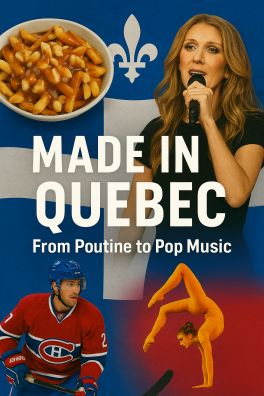
French 3802 - Made in Quebec: From Poutine to Pop Music & Everything in Between - GEN Theme: Traditions, Cultures, and Transformations
Professor Wynne Wong, ONLINE Asynchronous, 3 credit hours, taught in English
What do poutine, Céline Dion, hockey, and Cirque du Soleil have in common? They’re all part of Quebec’s vibrant popular culture, which both reflects and reshapes the province’s identity.
This course explores how Quebec’s cultural expressions such as food, music, sports, cinema, and more have served as powerful tools of expression and change in Quebec. We’ll trace how Indigenous traditions, French and British colonial legacies, and global immigration have shaped Quebec’s cultural landscape. Along the way, we’ll examine how the Quiet Revolution transformed society, shifting power between dominant and marginalized groups, and how these dynamics continue to influence Quebec today.
By engaging with Quebec’s cultural products—from classic chansons to contemporary cinema—you’ll gain insight into how language policy, social movements, and everyday practices intersect to create a rich, evolving cultural identity.
This course is taught in English, and delivered completely online in an asynchronous format. The course may be taken from anywhere at any time as long as assignments are completed by established due dates. Regular optional synchronous meetings are also available via Carmen Zoom.
French 3803 - Cultures of Resistance - GEN Theme: Citizenship for a Diverse & Just World
Professor Adela Lechintan-Siefer, TR 11:10am-12:30pm, Journalism Building 300, 3 credit hours, taught in English
The Resistance required secrecy, imagination, and courage to face the Nazi occupation during World War II. It is part of a long history of struggle for freedom and equality with pivotal moments such as the French revolution, Haitian Revolution, and decolonization.
In this course, we will explore and analyze how the concept of citizenship through resistance has been represented in the literature, film, music, and comics of the French-speaking world. We will examine works of art created to engage with cultural activism at crucial historic moments. We will study how individuals have been exercising the right to effect change in society by assuming agency in the face of various forms of oppression and power imbalance and apply these lessons to our own ideas for creating a more just and diverse world.
Variable topics in French and Francophone literatures and culturesFrench 3804, French Kiss: Love and Sex in the French Tradition

TR 4:10-5:05 online, 3 credit hours (Traditions, Cultures, and Transformations GE theme course taught in English, may also count toward the French minor or major)
Prof. Jennifer Willging
In French Kiss we examine a variety of French cultural texts from the Middle Ages to the present that reflect on the perennial human preoccupations of love and sex. We begin by asking why the French culture, people, and language have stereotypically been associated with love and sex since the Middle Ages (think of the love-sick French skunk, Pepe le Pew, for a 20th-century example). We then explore materials that offer idealized and prescriptive representations of love and sex in the French tradition—materials that present what their producers believe love and sex “should” look like—as well as texts whose representations deviate from norms in this domain. We ask questions such as, what kinds of love or sex have met with approval in the French (and more widely, the Western) tradition at various moments over the last millennium? What kinds have met with censure? What historical and cultural forces determine such rules? What happens when groups in a society (like women, young people, LBGTQI individuals, and racial, ethnic, or religious minorities) refuse to subscribe to dominant conceptions of love and sex? What kinds of rebellions, backlashes, and compromises occur when the ideas and behaviors of individuals or groups in this realm clash?
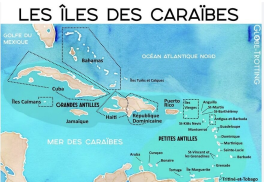
French 4401 – The Caribbean and the World
Professor Ryan Joyce, TR 11:10am-12:30pm, Hagerty Hall 259, 3 credit hours, taught in French
"The Caribbean is a microcosm of the world, where populations from around the globe have come together, with their cultures, traditions, and religions.” - Ennis B. Edmonds and Michelle A. Gonzalez, Caribbean Religious History: An Introduction (2010)
Souvent fantasmée comme utopie, paradis tropical ou Eldorado, les Caraïbes sont aussi un lieu d’exploitation, de résistances et de genèses culturelles, dont les réalités historiques ont profondément façonné le monde moderne. Ce cours propose une exploration du monde caribéen comme espace central, et non périphérique, de l’histoire mondiale, des imaginaires globaux et de la modernité occidentale.
En nous concentrant sur les Caraïbes francophones (Haïti, la Guadeloupe, la Martinique et la Guyane), ainsi que sur leurs diasporas, nous étudierons la région comme un site majeur d’échanges, de rencontres et de transformations historiques, sociales et culturelles qui ont marqué le monde, ainsi que les grands mouvements intellectuels et artistiques (Négritude, panafricanisme, surréalisme) issus de la région et les circulations culturelles à travers les arts visuels et la musique (jazz, hip-hop, banjo). Nous examinerons les liens entre la région et les États-Unis, en particulier Haïti et La Louisiane, ainsi qu’avec les diasporas caribéennes à New York, Miami et, plus récemment, dans l’Ohio.
À travers des films, des nouvelles, de la poésie, de la musique, des récits oraux, des archives, des œuvres visuelles et d’autres formes artistiques, nous examinerons comment la Caraïbe a été représentée, imaginée et vécue, et pourquoi elle demeure aujourd’hui un espace clé pour penser le monde contemporain.
French 4690- French Internship
Professor Adela Lechintan-Siefer, 1-6 credit hours, instructor permission required
Turn your French studies into real-world experience! This internship course immerses students in professional or educational environments where French is used in meaningful, practical ways. You will gain hands-on experience while strengthening your language skills and building competencies that employers value.
Students collaborate on real projects, solve authentic workplace challenges, and develop transferable skills such as communication, teamwork, project management, and adaptability in a French-speaking context. You will create professional materials in French, including reports, lesson plans, presentations, and correspondence, tailored to the needs of your internship site. Whether you are preparing for a career, graduate study, or international opportunities, this internship helps bridge the gap between classroom learning and the professional world, en français!
Prerequisites: Two 3000-level courses in French (French 3501, 3502, or 3503 is recommended but not required), or permission of instructor, and the OSU Youth Activities & Programs Policy Training.
French 5601- French Center of Excellence Colloquium
UGRD 28260 / GR 28259: Professor Benjamin Hoffmann, ONLINE, 1 credit hour, taught in French
This dynamic workshop offers students a unique opportunity to engage with world-renowned scholars and award-winning novelists visiting The Ohio State University. You’ll attend events featuring international experts who will share their groundbreaking work. You’ll also have the chance to meet and have lunch with these guest speakers, gaining personal insights into their research and creative processes while practicing your French outside the classroom. As part of the French Press Literary Channel, you’ll record a short video review of a recent novel. This workshop is a great option for maintaining your French language skills, especially if you’re unable to fit a 3-credit course into your busy schedule. The assignments are designed to be very flexible and fit around your existing commitments. No heavy workload – just an exciting opportunity to connect with leading voices in French and Francophone culture!
Undergraduate and graduate students registered for this course will receive one credit hour per semester for attending the Center of Excellence’s events, lectures co-sponsored by the Center of Excellence, and subsequent discussions. The number of these lectures will vary from one semester to the next but will be no less than four and no more than six. When the Center of Excellence welcomes speakers to campus, participants will be expected to have lunch with them. (Note: the cost of these lunches will be covered by the Department of French and Italian and the Center of Excellence).
French 5701 - La culture documentée
UGRD 36967 / GR 36968: Professor Maggie Flinn, TR 9:35am-10:55am, Campbell Hall 107, 3 credit hours, taught in English
Dans ce cours, on se penchera sur le cinéma documentaire français, pour s’interroger sur les diverses façons de représenter le monde réel. Le cours sera organisé autour de problématiques/thèmes (e.g. le musée, l’histoire, la ville, la voyage, le sport, etc.) qu’on verra à travers plusieurs films (ainsi que quelques BDs, en contrepoint), afin de s’interroger sur les moyens différents d’aborder ces questions. On verra des films classiques et ainsi que des films contemporains.
Italian Undergraduate Courses
Italian 2055 - Mafia Movies - GE Foundation: Literary, Visual, & Performing Arts

Professor Giuliano Migliori, ONLINE, WF 2:20pm-3:40pm, 3 credit hours, taught in English
*This class is fully online. Distance synchronous with asynchronous components
The Mafia in Italy is referred to as an octopus as the organization pervades almost every facet of Italian cultural life. Tony Soprano, Don Vito and Michael Corleone, Lucky Luciano, Robert De Niro, Martin Scorsese, or Christopher Moltisanti are some of the figures that contribute to the myth of the Italian and Italian-American Mafias. Others, such as Jonas Carpignano, Peppino Impastato, and Roberto Saviano explore a new cinematic wave about organized crime. In this course we watch Italian and American mafia movie and television hits, and explore the myth of the Mafia that is so widespread in American popular culture, and trace its histories and receptions as it passes across time and through a variety of cinematic styles. We will question whether there exists a unique American or Italian cinema and television treating Mafias, in its polymorphic nature, and explore how filmmakers from the two countries approach the subject in dissimilar fashions, especially in terms of stereotyping, gender, politics, and representations of violence and alluring criminals.
This course can count as a course taught in English toward the Italian minor and the Italian or Italian Studies majors.

Italian 2056 - Love & Difference on the Italian Screen - GE Foundation: Race, Ethnicity & Gender Diversity
Professor Jonathan Mullins, TR 2:20pm-3:40pm, Smith Lab 1009 3 credit hours, taught in English
Love has long been a theme that has dominated Italian film and television. But how have such representations of love been conditioned by questions of identity including race, gender, sexuality and ethnicity? This course explores this question through representations of eros, romance and friendship in a variety of moving images. We will engage with silent film that looks at what it means to be a Southern Italian woman (Assunta Spina) to more recent film on cross-cultural friendship between migrants in Shun Li and the Poet, ands interracial romance in Summertime. We study how the theme of love condenses a variety of concerns and anxieties about racial, gender, sexual and ethnic identity, with attention to how these forms of identity emerge in the context of 20th and 21st century Italy. Students will reflect on what it means to study such forms of identity in the Italian context, and also on their own experiences and biases that they bring to the study of race, ethnicity, gender and sexuality as students in Ohio.
Never study cinema before? No worries. A crucial component of the course will be dedicated to studying the aesthetics of narrative cinema, and also understanding it as a complex industrial product with its own systems of production and reception.
Italian 2102 - Contemporary Italian Society
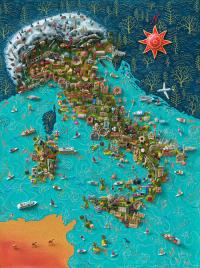
Stefani Scimeca, WF 9:35am-10:55am, Hagerty Hall 259, 3 credit hours, taught in Italian
How did we arrive at the contemporary forms of Italian culture that one can find in Rome today? As the adage goes, "All roads lead to Rome," and indeed diverse trajectories have brought immigrants from within Italy and from abroad to call the capital city home. Deep and lasting transformations of Italian culture and society are more and more apparent; the influence of Italy’s institutions is waning, as a result of shifting and broadening traditions, values, and perspectives of what was once dominant and normative Italian cultural beliefs on religion, gender, family, and more. All these transformations are at play in the principal text of this course: the best-selling 2006 novel Clash of Civilizations for an Elevator in Piazza Vittorio by Amara Lakhous, an acclaimed Algerian-Italian author. Particularly when reading the principal novel but also in additional readings and videos, we will delve into the convergence of 20th and 21st century Italian cultural history and language expression through analysis of a variety of contemporary speech registrars, dialects, European cultural reference points, and immigration and refugee crises at the turn of the century.
In this course we explore modern and contemporary Italian society as we focus on the four language skills: listening, reading, writing, and speaking. Since you are transitioning from the elementary to the intermediate level, more emphasis will be placed on developing your reading skills, so you will be exposed to a lot of authentic Italian texts of different lengths and in different genres. However, your listening, writing, and speaking skills will not be ignored! Grammar will be reviewed and tested throughout the course.
The targeted structures are a review of nouns and adjectives; regular and irregular present indicative verbs; the passato prossimo, the imperfect, the past perfect (trapassato prossimo) and the remote past (passato remoto); the subjunctive mood, hypothetical constructions, and relative and interrogative pronouns.

Italian 3103 - Stylistics
Professor April Weintritt, TR 9:35am-10:55am, Hagerty Hall 206, 3 credit hours
This is a writing intensive course in which students develop the skills necessary for writing efficiently and effectively in Italian in a variety of styles using the support of technology such as an online dictionary, a grammar and spell checker, and automatic translation tools. The theory is that students have these tools at their disposal, so they should learn how to use them properly in order to improve their writing. At the same time, however, students will learn about and reflect on the consequences of using technology and AI to enhance their writing – the benefits as well as the obstacles.
Prereq: 2102, or permission of instructor. FL Admis Cond course.
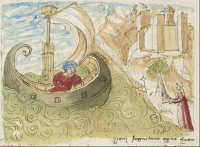
Italian 5330 - The Seas of Italy
UGRD 35820 / GR 35819: Professor Jonathan Combs-Schilling, TR 12:45pm-2:05pm, Denney Hall 245, 3 credit hours
The course will examine Italian representations of the sea from Middle Ages to the Renaissance and beyond, with an emphasis on literature but including visual media and music as well. From the infernal seas of Dante to storm-tossed lovers and epic naval battles, we will chart the pervasive currency of maritime figures, motifs and discourses across this period. The course will familiarize students with a wide swath of the Italian cultural “canon” and give them a robust sense of the major trends, themes and issues in Medieval and Renaissance culture, but throughout our chief inquiry will be how we can use seas (both real and symbolic) to better understand the production of Italian identities.
FRIT Undergraduate Courses
FRIT 3054 - The 21st-Century Skill: Intercultural Competence for Global Citizenship - GEN Theme: Citizenship for a Diverse & Just World
Taught in English, 3 credit hours
26565: Professor Qian Liu, WF 12:45pm-2:05pm, Hagerty Hall 050
26988: Dr. Salome Fouts, MW 2:20pm-3:40pm, Enarson Classroom 322
27268: Dr. Kelly Campbell, TR 2:20pm-3:40pm, Hagerty Hall 050
37201: Professor April Weintritt, TR 11:10am-12:30pm, Hagerty Hall 050
Intercultural competence is an essential characteristic for becoming globally-minded and functioning in multiple, diverse, local and non-local networks, and for that reason it has been identified as being among the top ten skills necessary for succeeding in the 21st century. Achieving the skills, knowledge, behaviors and attitudes of interculturally competent global citizens is a lifetime endeavor, so in this course you will acquire the foundations for the journey. This course is divided into four modules: 1) Foundational concepts; 2) Intercultural interactions; 3) Intercultural (communicative) competence; 4) Intercultural competence and citizenship. We will begin by exploring the complexities of the term ‘culture’ and how culture shapes our understanding of ourselves and others, our identity, and our worldview. You will explore your own cultural background by doing a cultural autobiography. You will delve into how implicit biases and stereotypes impact your interactions with others and learn to engage in inclusive practices that make you a better team player by participating in an investigative intercultural team project. In addition, you will learn the unique ways in which learning a world language and experiencing other cultures contribute to the development of intercultural competence.
This course meets the goals and expected learning outcomes of the GE theme category: Citizenship for a just and diverse world. It also counts as a course taught in English for the Italian/Italian studies majors and minor, and the French/French and Francophone studies majors and minor. This course also counts toward the ASC Leadership major.
FRIT 3301- Discovering French Language Acquisition; GE: Social and Behavioral Sciences Foundations/Embedded Literacies for Qualitative Data Analysis
Professor Wynne Wong, TR 9:35 am- 11:55 am, Enarson Classroom Building 240, 3 credit hours
Have you ever wondered why some people seem to pick up languages quickly, while others struggle even after years of study? Why learners sometimes understand more than they can say? Or why it can be so hard to “lose” an accent?
FRIT 3301 is for anyone who loves languages and is curious about how languages are learned. In this course, we’ll explore the fascinating (and sometimes surprising) ways people acquire a second language—and what factors can shape the process, from age and motivation to classroom experience and exposure outside of class.
This course is also hands-on and creative: you’ll have the chance to design engaging and effective pedagogical activities and mini lessons, thinking like a language teacher and learning how research can inspire practical ideas. You will also conduct a mini research project related to an issue of second language acquisition where you’ll investigate a question that genuinely interests you and discover what research can tell us about real-world language learning.
All language backgrounds welcome!
This course fulfills 3-credit hours for the Social and Behavioral Sciences Foundations and the Embedded Literacies for Qualitative Data Analysis areas of the General Education requirement and counts as a course in English toward the Italian/Italian Studies majors and minor and the French/French and Francophone Studies major and minor.
French and Italian Graduate Courses
Italian 5330 - The Seas of Italy
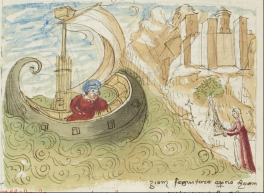
UGRD 35820 / GR 35819: Professor Jonathan Combs-Schilling, TR 12:45pm-2:05pm, Denney 245, 3 credit hours
The course will examine Italian representations of the sea from Middle Ages to the Renaissance and beyond, with an emphasis on literature but including visual media and music as well. From the infernal seas of Dante to storm-tossed lovers and epic naval battles, we will chart the pervasive currency of maritime figures, motifs and discourses across this period. The course will familiarize students with a wide swath of the Italian cultural “canon” and give them a robust sense of the major trends, themes and issues in Medieval and Renaissance culture, but throughout our chief inquiry will be how we can use seas (both real and symbolic) to better understand the production of Italian identities.
French 5601- French Center of Excellence Colloquium
UGRD 28260 / GR 28259: Professor Benjamin Hoffmann, ONLINE, 1 credit hours, taught in French
This dynamic workshop offers students a unique opportunity to engage with world-renowned scholars and award-winning novelists visiting The Ohio State University. You’ll attend events featuring international experts who will share their groundbreaking work. You’ll also have the chance to meet and have lunch with these guest speakers, gaining personal insights into their research and creative processes while practicing your French outside the classroom. As part of the French Press Literary Channel, you’ll record a short video review of a recent novel. This workshop is a great option for maintaining your French language skills, especially if you’re unable to fit a 3-credit course into your busy schedule. The assignments are designed to be very flexible and fit around your existing commitments. No heavy workload – just an exciting opportunity to connect with leading voices in French and Francophone culture!
Undergraduate and graduate students registered for this course will receive one credit hour per semester for attending the Center of Excellence’s events, lectures co-sponsored by the Center of Excellence, and subsequent discussions. The number of these lectures will vary from one semester to the next but will be no less than four and no more than six. When the Center of Excellence welcomes speakers to campus, participants will be expected to have lunch with them. (Note: the cost of these lunches will be covered by the Department of French and Italian and the Center of Excellence).
French 5701 - La culture documentée
UGRD 36967 / GR 36968: Professor Maggie Flinn, TR 9:35am-10:55am, Campbell Hall 107, 3 credit hours, taught in English
Dans ce cours, on se penchera sur le cinéma documentaire français, pour s’interroger sur les diverses façons de représenter le monde réel. Le cours sera organisé autour de problématiques/thèmes (e.g. le musée, l’histoire, la ville, la voyage, le sport, etc.) qu’on verra à travers plusieurs films (ainsi que quelques BDs, en contrepoint), afin de s’interroger sur les moyens différents d’aborder ces questions. On verra des films classiques et ainsi que des films contemporains.
FRIT 7600- Teaching World Languages
Professor Budimka Uskokovic, T 10:00 am - 12:00 pm, Hagerty Hall 488, 3 credit hours
This course provides instructors with foundational knowledge of second language acquisition (SLA) theory and research to guide their teaching practices. Emphasizing creativity and flexibility, students will learn how to design pedagogically sound activities that are not only aligned with SLA principles but also tailored to their unique teaching contexts. The course encourages teachers to adapt research-based strategies to their individual classroom needs, fostering innovation in lesson planning and student engagement.
Prerequisite: Graduate teaching associate in the Department of French and Italian, or permission of instructor. Not open to students with credit for French 7301 or Italian 7301.
French 8205- Thinking Through Narrative. French Fiction and Non-Fiction in the 21st Century
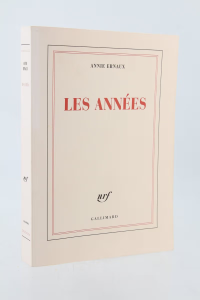
Professor Benjamin Hoffmann, T 2:20pm-5:00pm, Hagerty Hall 206, 3 credit hours, taught in French
This graduate seminar examines French fiction and non-fiction from the mid-twentieth century to the present as intertwined spaces where literary creativity and scholarly inquiry converge, challenging the conventional divide between creative writing and academic discourse. Guided by the concept of pensée du récit – thinking through narration – the course investigates how storytelling itself, whether fictional or factual, can become a mode of knowledge production and a locus of interdisciplinarity.
Focusing on hybrid forms such as exofiction, autofiction, historical fiction, as well as various modes of récit non fictionnel, we will engage with works by Jean Echenoz, Olivier Guez, Annie Ernaux, Alice Kaplan, Laure Murat, Bruno Cabanes, and others, alongside theoretical reflections by Françoise Lavocat, Pierre Bayard, Marc Escola, and Patrick Boucheron.
Through close reading and comparative analysis, students will explore how narrative strategies, imaginative reconstruction, and scholarly method intersect to create original forms of intellectual inquiry. Key questions include: How can narration generate a distinctive form of knowledge about cultural objects and historical experience? By what criteria might hybrid works situated between scholarship and creation be evaluated? And how might “thinking through narrative” reshape both research and pedagogy within the humanities?