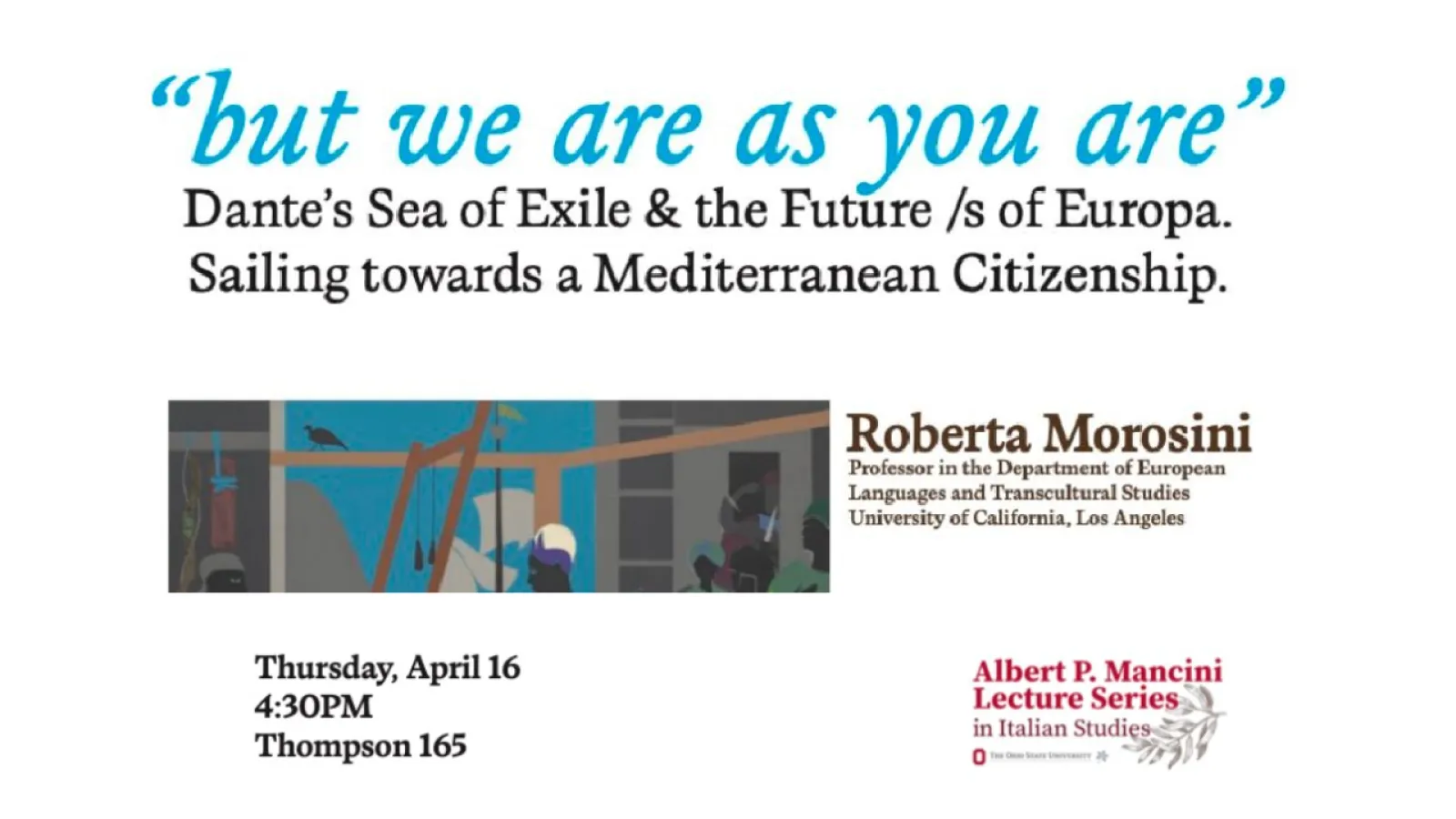
This paper reflects on the responsibility of literature and on why Dante continues to matter today. Read from a geocritical perspective, the Comedy articulates exile as a condition of movement and crossing, through which the Mediterranean is constructed not as a boundary but as a space of passage, memory, and ethical tension—in short, as a space of modernity. Beginning with Dante’s forced mobility, the paper examines how maritime routes and archipelagic connections displace fixed notions of center and periphery. In dialogue with Boccaccio and with contemporary artists such as Barthélémy Toguo, it shows how medieval literature anticipates modern experiences of displacement and migration. By exposing the violence and exclusions embedded in founding narratives, literature emerges as an ethical practice that makes visible what dominant histories conceal. Through Dante’s maritime imagination, this paper proposes the idea of a Mediterranean citizenship grounded not in territorial stability, but in shared crossings and relational forms of belonging-offering critical tools for reading the present and imagining Europe’s unfinished futures.
In 2024, a generous gift from the family of Italian Professor Albert Mancini helped to create the Mancini Fund, which promotes and facilitates lecture series and experiences for Italian language, literature, and culture at Ohio State. It is thanks to funds like this that we can continue to provide Ohio State and the broader community with Italian programming.
To ask questions about accessibility or request accommodations, please contact sanabria.3@osu.edu. At least two weeks' advance notice will help us to provide seamless access.